Introduction
When I first started learning photography, RAW vs JPEG photography didn’t make much sense to me at all.
I knew my camera gave me two options when taking photos, but I didn’t really understand why there were two formats or which one I should actually be using.
In simple terms, RAW and JPEG are two different file formats your camera can save images in. One gives you maximum editing control, while the other gives you convenience and ready-to-use images.
If you’re learning photography, this becomes more important once you understand how settings like aperture in photography , ISO in photography, and shutter speed in photography affect your images.
What Is RAW in Photography?
RAW is an unprocessed image file that captures all the data your camera sensor records when you take a photo.
Instead of applying heavy processing inside the camera, RAW files keep as much information as possible.
This means you can adjust things like:
- exposure
- highlights and shadows
- white balance
- colour tones
The trade-off is that RAW files are larger and require editing software before you can use or share them.
What Is JPEG in Photography?
JPEG is a processed image file that your camera automatically compresses and edits when you take a photo.
When shooting JPEG, your camera makes decisions for you such as contrast, sharpness and colour adjustments.
This results in:
- smaller file sizes
- faster performance
- ready-to-use images straight from the camera
However, you lose some flexibility when editing compared to RAW.
RAW vs JPEG Photography: Key Differences
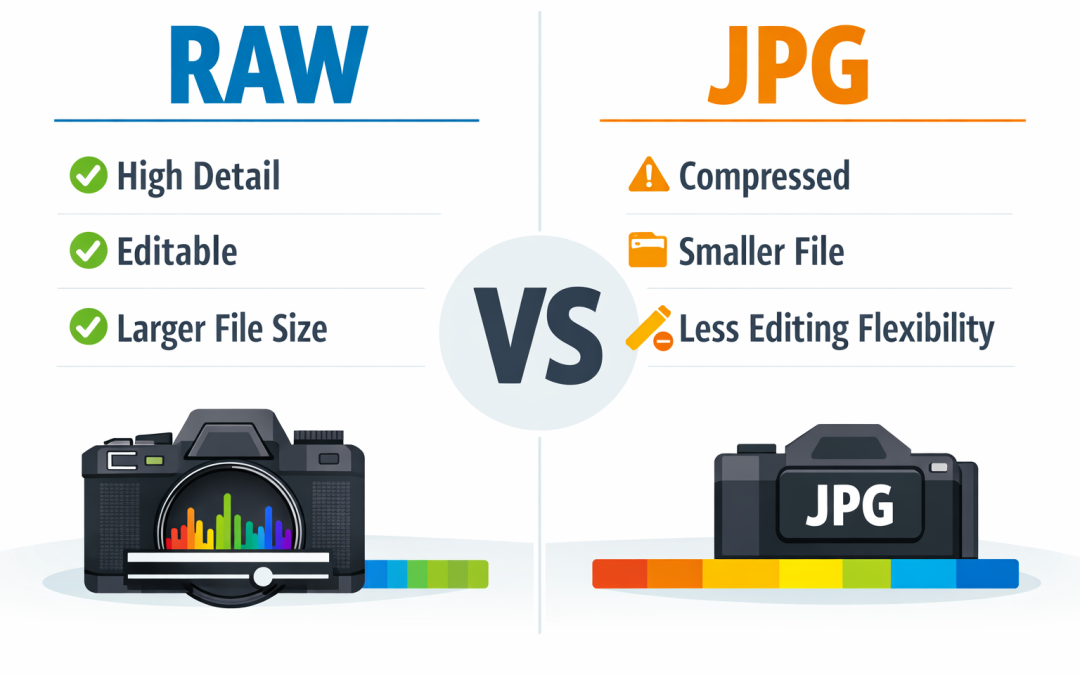
The main difference between RAW vs JPEG photography comes down to control versus convenience.
RAW gives you full editing flexibility, while JPEG gives you a finished image straight away.
In simple terms:
- RAW = more control, more editing freedom, larger files
- JPEG = quicker workflow, smaller files, less editing flexibility
Neither format is “better” in every situation — it depends on how you shoot and what you need.
When to Use RAW in Photography
RAW is best when you want maximum control over your final image.
Common situations include:
- landscape photography
- portrait photography
- weddings and events
- low light photography
- professional work
If you plan to edit your photos later, RAW gives you much more flexibility to recover detail and adjust exposure.
When to Use JPEG in Photography
JPEG is best when speed and simplicity matter more than editing control.
Common situations include:
- everyday photography
- travel photos
- social media content
- family moments
- situations where you don’t want to edit
JPEG is ideal when you want good results straight out of the camera.
Can You Shoot RAW and JPEG Together?
Most modern cameras allow you to shoot RAW and JPEG at the same time.
This gives you:
- a quick version ready to share
- and a high-quality version to edit later
The downside is that it uses more storage space and can slow down burst shooting.
How RAW vs JPEG Photography Fits Into the Exposure Triangle
RAW is not part of the exposure triangle, but it becomes more relevant once you start understanding how aperture in photography, ISO in photography, and shutter speed in photography work together.
That’s because RAW files give you more flexibility to fix exposure and colour after the shot has been taken.
If you want to understand how those settings connect, you can read my guide to the exposure triangle here
Common Beginner Mistakes
One common mistake is switching to RAW too early without understanding why it’s useful, which can make editing feel overwhelming.
Another mistake is never trying RAW at all and limiting your ability to improve images during post-processing.
The best approach is to experiment with both and see what fits your workflow.
Final Thoughts
RAW vs JPEG photography isn’t about which one is better — it’s about what you need from your images.
RAW gives you flexibility and control, while JPEG gives you speed and simplicity.
As you progress in photography and start working more confidently with aperture in photography, ISO in photography , and shutter speed in photography, you’ll naturally start to understand when RAW becomes the better choice.
For beginners, JPEG is often enough. But once you start editing more seriously, RAW becomes the format you’ll rely on most.